
— located at 5 High Street, Acton MA
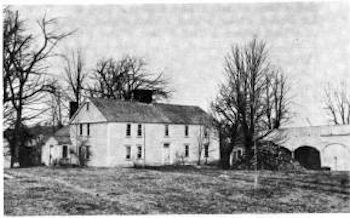
The house was built in 1707 for Ephraim Jones (1679-1710), founder of an early textile business and other mills that formed the nucleus of the present town of Acton. The largest and most central house of this settlement, it served as the local garrison house for protection from Indian raids made along the Massachusetts frontier during Queen Anne’s War of 1702-1713.
Acquired in the 1740s by Ammiruhammah Faulkner of North Andover, for 202 years it became the homestead of six generations of Acton’s Faulkner family, prominent in many fields of endeavor, who continued the processing of woolen cloth at the fulling mill across the road, adding other mills to the complex on Fort Pond Brook.
Faulkner House and the American Revolution
At the start of the Revolutionary War, the Faulkner House was the home of the commander of Acton’s West Militia Company, Francis Faulkner. On April 18, 1775, alarm riders rode from Boston spreading the word that the “Regulars March on Concord,” the most famous of whom was Paul Revere. He was captured in Lincoln after meeting up with Dr. Samuel Prescott of Concord. Dr. Prescott eluded capture and brought the alarm to Concord, and then Acton. After informing Captain Joseph Robbins and Captain Isaac Davis, he went to South Acton and the Faulkner house. Major Francis Faulkner fired off three shots, the prearranged signal alarm to muster. The West Militia and their families came to the property and from here marched to Concord. As the men assembled, the families of the militia cooked meals for the men over open fires in the yard which were later brought to those fighting on the Battle Road by Francis Faulkner, Jr who was 15 years old.
*Faulkner homestead from a photograph taken about 1880 – Courtesy of American Antiquarian Society